


our
actions
Formula 1 is committed to implementing solutions to reduce its environmental impact and achieving carbon neutrality by 2030.
These efforts help promote more sustainable practices in motorsport and raise awareness of the importance of reducing greenhouse gas emissions in the context of climate change.
Our CErtifications
- Integrated with Bell’s ISO-14 001 certification
- This certification attests of exemplary management of environmental issues in event organization.
- FIA 3-star certification
- This international recognition, the highest distinction awarded by the FIA for sustainable development, underlines Bell GPCanada’s rigorous commitment to reducing its environmental footprint, promoting responsible practices and achieving the highest standards of sustainability in motorsport.
Clean Energy and Air Pollution

- Carbon footprint reduction through green electricity.
- Offset unavoidable emissions that remain on or off-site and on-site renewables.
On location and Year-round –
- Hydro electricity powers all permanent buildings and the Fan Zone.
- All scooters and most vehicles used by marshals and other staff are electric.
- In 2026, we used eight batteries to power several areas. This represents a 200% increase compared to 2024. These batteries enabled us to reduce our reliance on diesel generators.
- Starting in 2026, the Formula 1 Grand Prix du Canada has taken place in May. This change, implemented by Formula 1 as part of its Net Zero 2030 objective, reduce total CO₂ emissions by nearly 2,719 tonnes. This is equivalent to the annual emissions of approximately 830 cars.
- Since 2022, we have been accounting for Scope 1, 2 and 3 GHGs.
Circuit Greening and Fan Wellness


- Focusing on fan wellness at track.
On location –
- Circuit Gilles-Villeneuve is located on Île Notre-Dame in the heart of Parc Jean-Drapeau.
- A green terrace accessible to Paddock Club clients is located on the roof of the garage complex.
- Various terraces are set up on the site, allowing spectators to relax while enjoying the event.
- As a promoter using the Parc Jean-Drapeau site, we contribute to the Oxygen Fund, which aims to counter the emissions created during the presentation of our event.
- Vegan and vegetarian options are offered at food concessions to reduce the ecological footprint and satisfy a greater number of spectators.
- Concessions are encouraged to propose local products.
- Relocation of groundhogs during the event to ensure their protection.
- Implementation of a communication plan to raise spectators’ awareness of the need to protect the Park’s biodiversity.
Cleaner fan travel to the event
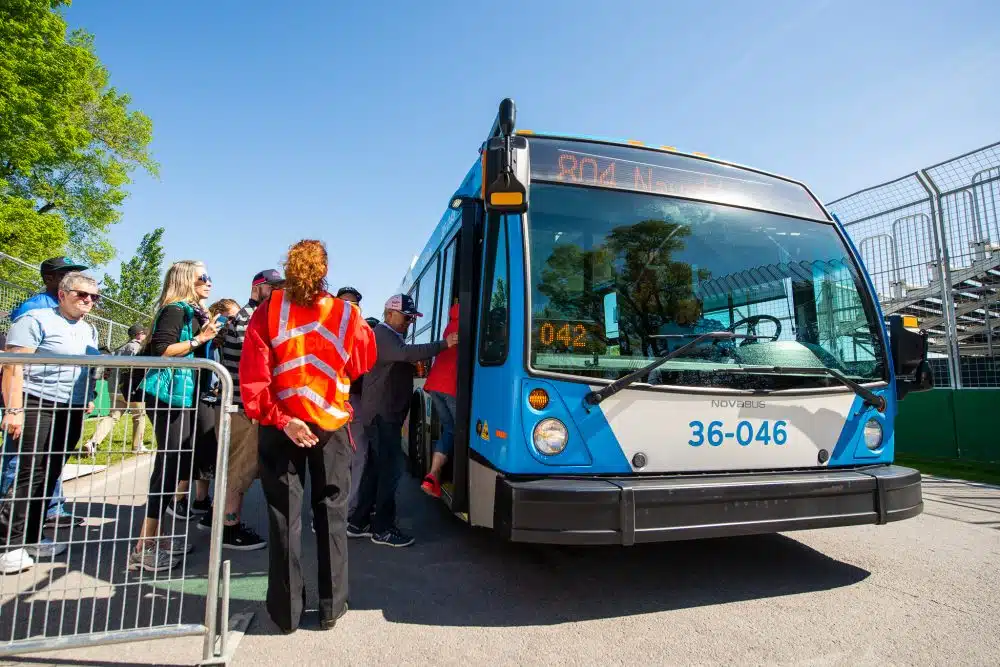


- Actively support cleaner routes for fans to reach the race.
On location –
- 95% of our spectators travel to the Formula 1 Canadian Grand Prix by public or active transport. Bike, walk, take the metro, bus or shuttle: there are plenty of options!
Year-round –
- Promoter offices are accessible by public transit.
Residual materials Reduction and Recycling


- Residual materials management.
- Use of sustainable materials for concessions and catering.
- Food donations or food conversion into energy.
On location –
- Each year, a team of nearly 300 people is responsible for managing the residual materials generated during the event (garbage, recycling, composting).
- 68 water refill stations are available throughout the site, so you can refill your reusable bottles.
- Over 100,000 infinitely recyclable aluminum glasses are used during the Formula 1 Canadian Grand Prix.
- We ask our food concession managers to compost organic waste, recycle recyclable materials, reduce water consumption and waste production. 100% of containers offered by concessions are compostable.
- This year, as part of our objective to increase our recovery rate (rate of materials diverted from landfill), we have set up 2 sorting stations on site. At these stations, our teams are responsible for sorting your waste.
- Since the 2023 edition, the Formula 1 Canadian Grand Prix has been able to count on a green squad made up of some fifty volunteers. Their role: to raise spectators’ awareness of sustainable development initiatives and support them in their sorting efforts. Present in the field, these volunteers are this year also mobilized at the sorting stations to provide clear information and encourage optimum management of residual materials.
- A deposit system was deployed throughout the site. The aim of this measure is to encourage the recovery and recycling of returnable containers.
- In 2025, we collected food waste with the Tablée des Chefs. This collection enabled us to recover 12.497 kg of food, the equivalent of 41.656,2 portions that were redistributed.
- Since March 2023, the use of single-use plastic has been banned on the territory of Montreal.
- In 2019, we created a digital version of the official program to give fans access to editorial content online, thus reducing its ecological footprint.
- Since 2015, business boxes have completely eliminated single-use plastic. Since 2023, no single-use plastic packaging or utensils are distributed by our dealers.
On location and Year-round –
- Deposit bins (Consignaction) are made available to employees for collecting cans.
- Since the 2022 edition, tickets for the event are only available in electronic version.
Local Community engagement

On location –
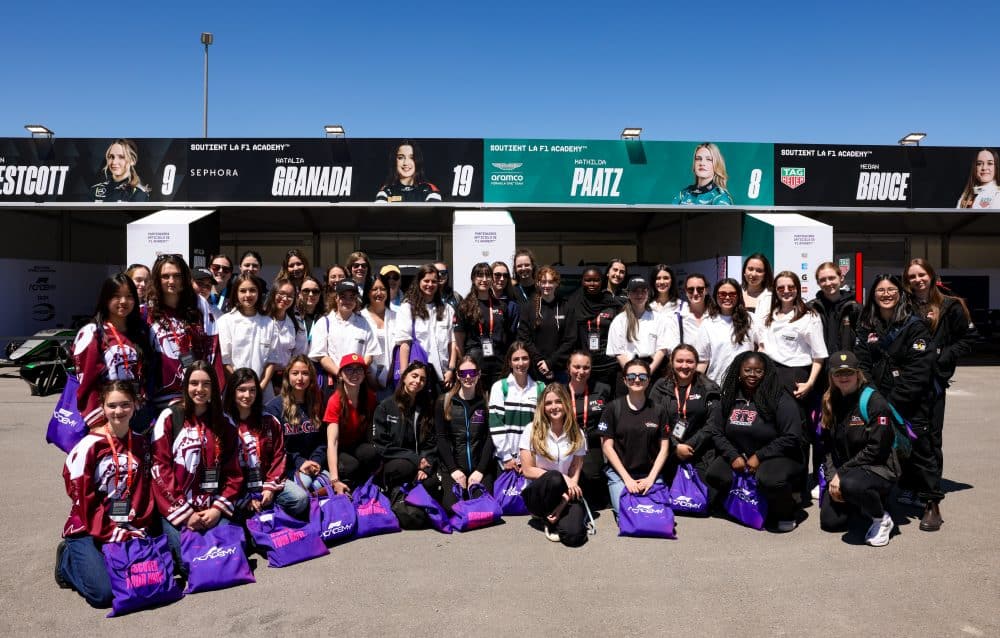
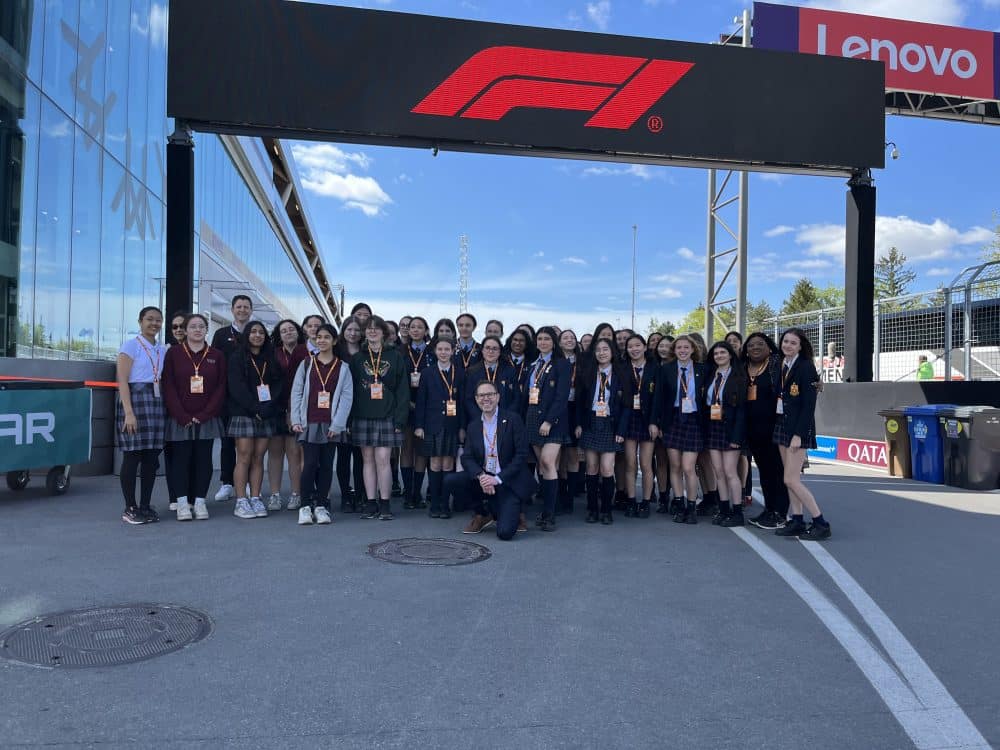
- Through a wide range of initiatives, we provide local educational institutions with unique access to the Formula 1 Grand Prix du Canada. Whether through showcasing student projects and engineering prototypes, participating in educational workshops, exploring behind-the-scenes operations, or engaging with industry professionals, our goal is to support, inspire, and connect the next generation with opportunities in motorsport, science, technology, and innovation.
- We also collaborate with a variety of community organizations to promote inclusion and maximize the positive impact of the event. Through access programs, immersive experiences, and educational activities, we help provide young people from diverse backgrounds with unique opportunities for discovery, learning, and inspiration.
- As part of our commitment to social and environmental responsibility, we support several local organizations through the redistribution of surplus food and materials, helping to reduce waste while addressing tangible community needs. These initiatives reflect our ongoing commitment to creating a lasting positive impact for the people and organizations that make up our community.
Year-round –
- Bell GPCanada is involved with organizations that fight sexual exploitation.
- Employees are encouraged to support causes close to their hearts.
- We sincerely believe that our involvement with universities is beneficial. Whether through the hiring of interns, participation in networking events or as panelists.